Getting Started with Cooking Adventure
Your first shifts with chef Noma — from Steam install to clean early three-star habits.
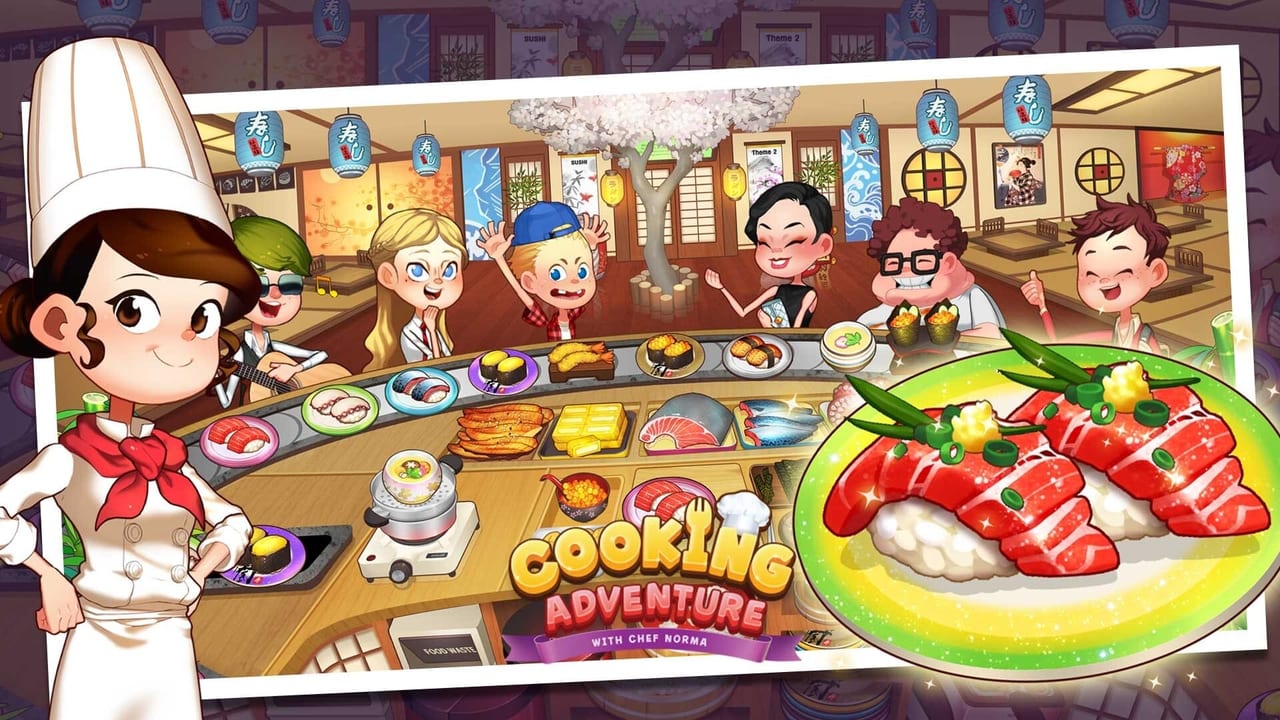
Cooking Adventure is a fast-paced 2D cooking time-management game from BPMG Inc., released on Steam on November 17, 2026 for Windows and macOS (app 4729710). You play as chef Noma, clear ticket queues under patience pressure, earn kitchen currency, and upgrade stations across 12 restaurants and 540 stages. The base game is buy-once with no IAP inside the campaign. Launch pricing sat near $14.99 with a 15% discount ending November 30, 2026. This beginner guide gets you from first launch to a stable early-game loop without wasting upgrades or burning stages for no reason.
If you already know the genre, skim the checklist, then jump to Controls and the Grill House and Sushi House walkthrough. If time-management cooking is new, read every section once, then keep this page open during your first two restaurants.
What you are trying to do
Each stage is a timed service shift. Customers place orders. You prep ingredients, cook them on the correct station, finish toppings or plating, and serve before patience empties. Clean, fast service pays currency. Stars rate how well you kept pace and quality. Currency funds kitchen upgrades that shorten prep, expand cook capacity, and reduce travel time between stations. That loop repeats across twelve themed restaurants — Grill House, Sushi House, Coffee House, Pasta House, Doughnut House, Chinese House, Ramen House, and more — with competitions and rankings available when you want leaderboard pressure beyond campaign clears.
Day-one checklist
- Install from Steam on Windows or macOS and confirm mouse plus keyboard input feels responsive.
- Complete the tutorial prompts without skipping — they introduce order tickets, cook timers, and serving.
- Clear early Grill House stages with a focus on not burning food, not on perfect speed.
- Revisit PC controls if your cursor path feels chaotic between prep and serve.
- Spend first currency on the station that caused your last failure, guided by kitchen upgrades.
- After comfortable clears, push for stars using three-star strategy.
- Customize Noma with costumes when you want flair; treat them as cosmetic, not power.
- Bookmark the Guides Hub so restaurant walkthroughs stay one click away.
The order-to-serve loop in practice
Read the ticket before you touch ingredients. Identify shared prep across multiple orders so you batch chopping or mixing instead of restarting the same action three times. Start the longest cook first when several dishes compete for attention, then fill gaps with quick toppings or plating. Never leave a nearly finished grill or fryer unsupervised if burn windows are tight — a burnt item costs more than a slightly late plate because you rebuild from zero while patience keeps falling.
Serve only complete dishes. Incomplete toppings look fast but fail the order and tank mood. When two customers are equally impatient, finish the plate that is one action from done rather than starting a fresh cook. That triage habit alone separates early failures from steady clears.
Early restaurants and the demo path
The demo highlighted Grill House and Sushi House with 10 stages each. In the full game those kitchens remain the best onboarding path because grill timing and sushi rolling teach opposite skills: one rewards watching heat windows, the other rewards precise multi-step assembly. Master both before you sprint into Coffee House espresso timing, Pasta House boiling windows, Doughnut frying, Chinese House wok pressure, or Ramen broth and topping stacks. The Grill and Sushi walkthrough goes deeper on station layouts and failure points for those two houses.
Currency and upgrade discipline
Early currency feels scarce because every station wants an upgrade. Resist spreading coins evenly. If you keep burning steaks, improve grill capacity or timing aids first. If tickets pile while you plate sushi, expand prep or topping speed. The Kitchen Upgrades guide ranks common priorities so you do not buy cosmetic kitchen flair before functional speed. Remember: upgrades multiply every future stage in that restaurant, while a single three-star retry only fixes one score.
Stars, competitions, and achievements
Campaign progress unlocks restaurants and stages; stars measure excellence inside each shift. You do not need three stars on stage one to continue learning, but you will want a plan once mid-tier restaurants demand tighter timing. Competitions and rankings sit beside the campaign for players who enjoy comparative scores. Costumes let you customize Noma without changing the buy-once economy. There are 44 achievements — chase them after your kitchen loop feels automatic so achievement hunting does not teach bad rush habits.
Common beginner mistakes
- Starting every cook immediately without reading the full ticket board.
- Ignoring burn timers while chasing a different order.
- Buying random upgrades instead of fixing the bottleneck that ended the last shift.
- Retrying for three stars before controls and station paths feel natural.
- Confusing the Steam chef name Noma with the separate mobile F2P presentation that uses Norma branding.
How this wiki fits your sessions
Use Getting Started (this page) for orientation. Use Controls when input mistakes cost you. Use Three-Star Strategy when clears are easy but stars are not. Use Kitchen Upgrades before big spending. Use Grill and Sushi when those restaurants are your current wall. For lists and meta pages, visit the Codes Hub, Tier List Hub, Updates, Players, and Links Hub.
First-hour success target
By the end of your first focused hour you should: finish the tutorial, clear several early Grill or Sushi stages without panic restarts, understand patience meters at a glance, and know which upgrade you will buy next. You do not need perfect stars yet. You need a calm loop: read tickets, batch prep, respect cook windows, serve complete plates, then invest currency where the kitchen actually slowed you down.
Cooking Adventure rewards deliberate hands more than lore reading. Keep shifts short when you are learning, review one failure cause per retry, and rotate back to the Guides Hub whenever a new restaurant introduces a station you have not trained. With twelve restaurants and five hundred forty stages ahead, strong fundamentals beat rushed grinding every time.
Frequently Asked Questions
Quick answers for new and returning chefs.
When did Cooking Adventure release on Steam?
Cooking Adventure released on November 17, 2026 for Windows and macOS via Steam (app 4729710), published by BPMG Inc.
Is the Steam version free-to-play?
No. The Steam base game is buy-once with no base-game IAP. Launch price was about $14.99 with 15% off through November 30, 2026.
Who is the chef character?
On Steam you play as chef Noma. A separate mobile F2P version uses Norma branding; this wiki focuses on the PC release.
What should I upgrade first?
Upgrade the station that caused your last failure. See the Kitchen Upgrades guide for priority patterns across prep, cook, toppings, and serving.
Do I need three stars to unlock the next restaurant?
Focus on clean clears first. Use the Three-Star Strategy guide when you are ready to optimize scores; campaign learning matters more than perfect stars on day one.
Which restaurants should I learn first?
Grill House and Sushi House — they anchored the demo (10 stages each) and teach grill timing plus multi-step assembly used throughout the twelve-restaurant campaign.